How Movement in the Classroom Turned Math Into Fun: A Story from the Netherlands
13.07.2025
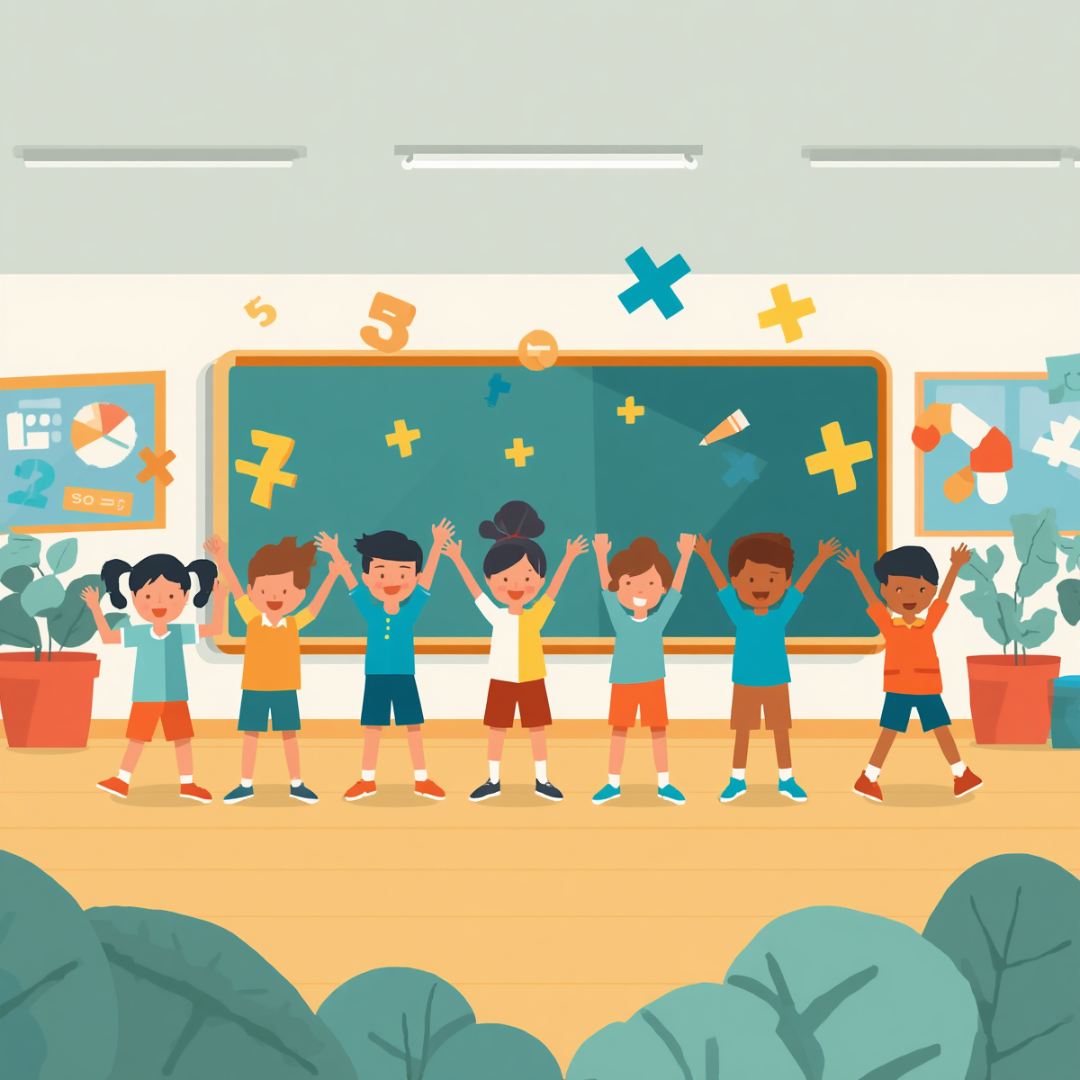
Movement and learning are allies, together helping children grow healthier, more skilled, and happier.
Researchers from the University of Groningen in the Netherlands carried out the project “Fit & Vaardig op School” with an experiment: What would happen if children were allowed to move while learning?
They invited 12 primary schools to participate, involving 499 children from grades 2 and 3 in a two-year study. Some students continued with traditional lessons, while the others took part in active math and language classes three times a week. Each lasting just 20 to 30 minutes, yet producing surprisingly strong results.
Movement was integrated into math and language lessons. For example:
- When learning multiplication tables, children would jump or clap for each result.
- When practicing spelling, they used gestures and rhythmic movement patterns to help remember letters.
- Number lines were walked out physically, not just imagined on paper.
In results, after two years, the children who learned through movement showed significantly greater progress in mathematics than those taught traditionally. They were also more careful in class and spent more time actively engaged in tasks.
Researchers and educators drew three key conclusions:
- Movement activates the brain. Physical activity stimulates attention and working capacity.
- Learning through movement enhances memory. Our bodies “remember” what we physically do.
- Children feel more involved and motivated. They are no longer passive — they become active participants in the learning process.